boston!

why do humans have this desire for possession, and why do we grow savage when we cannot satisfy it? (bae suah, a greater music, 60)
boston-river(w)(01).jpg

i find that there are two kinds of cities:  the ones i explore and the ones i settle into.

the latter is the rarer city, the kind of city that embraces me and makes me think, “hey, this feels familiar. i think i could see myself here; i think i could feel whole here.” it’s the kind of city i’m not frantic to see, the kind of city that discourages lists of things to do and foods to eat and neighborhoods to visit. it’s the kind of city that encourages slowing down, sitting in a cafe with a book and pastry and cup of coffee, absorbing moods instead of simply passing them by or walking them off. it’s the kind of city that says, “you have time. you’ll be here again, so slow down.”

it’s the kind of city that feels like it could be home, at least for a little bit because nyc will always be home. so far, i’ve only come across two cities like this:  sapporo and boston.

boston-bpl(w)(02).jpg
boston-bpl(t)(01).jpg
boston-doors(t)(01).jpg
boston-bpl(t)(02).jpg
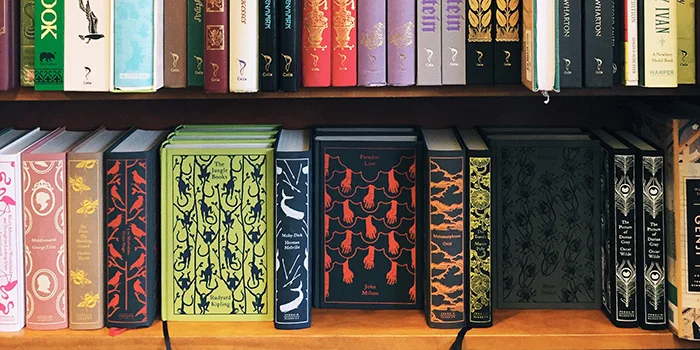
boston-books(t)(01).jpg
boston-books(w)(01).jpg
ultimately, “learning a foreign language” is too simplistic an expression for a process which is more like crossing a border; similarly, an individual’s development as a human being is only possible through language, not because language is our only means of communication, but because it is the only tool precisely calibrated for the application of critical thought. but to me, these thoughts of m’s were nothing but phantoms. a mother tongue isn’t a border that can just be crossed, not even with the strongest will in the world. even after fully mastering a foreign language (if such a thing is ever possible), your mother tongue still acts as a prison for your consciousness — this wasn’t a view that m ever expressed in so many words, but i knew that it was true. the fact that my mother tongue was different from m’s caused me unbearable grief. (61)

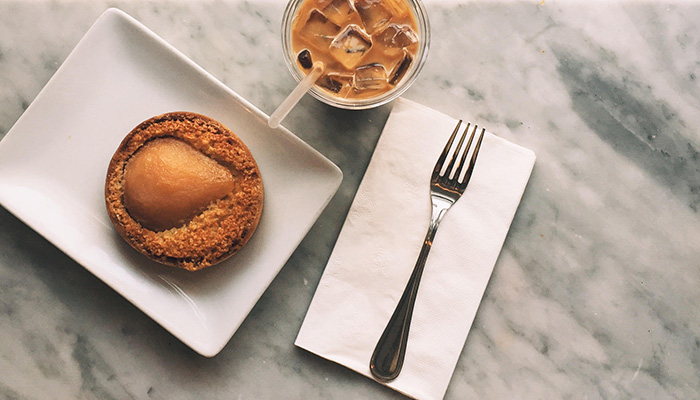
i took one book with me to boston because i didn’t want to carry more than one because i was traveling with friends and didn’t anticipate much down-time to read. on our second (and last) day, though, we split ways, and i found myself back in beacon hill, at tatte with a pear tart and a latte, exhausted and starving from walking and not really wanting to do much more city-seeing and/or touristing.

i spent the afternoon reading and finished this slim korean novel, a greater music by bae suah. two weeks ago, i went to hear deborah smith, the translator, speak at AAWW (that write-up is coming soon), and she’d briefly discussed a greater music and the language within — the narrator is a korean writer who returns to berlin to house-sit for her on-again/off-again boyfriend, and there’s a sense of the novel being in this in-between place language-wise because the narrator is in a foreign country, learning a foreign language, and feeling the frustrations of that linguistic barrier.

it’s been a few years since she’s been in berlin, and much of the novel is spent in remembering, in thinking back to her previous stay in berlin as a student. much of those thoughts, in turn, circulate around her former lover, m, whom the narrator hasn’t seen since she was last in berlin, though we meet m more as a ghostly figure who’s both central and peripheral to the narrator’s thoughts.

m views the world through theory. she’s clearly intellectual, and she thinks a lot, but there’s a sense through the novel that she’s removed from the world, not only intellectually or emotionally but physically, too, because of her health. this isn’t to make it sound like m’s reclusive or closed off to the world because she works, interacts with people, and so on; it’s more to say that i recognize her way of thinking, of thinking so deeply about things that everything is broken down into theories and nothing is simple or grounded.

the narrator is rather aligned with m’s ways of seeing the world, which leads to the thinking presented in the quote above. and it’s not that i have a problem with theory or that i don’t appreciate these deeper, more abstract ways of thinking about things, but here was (and is) my constant gripe with theory — that it often gets twisted up in itself and exists on its own self-elevated planes and eludes intersection with reality.


if m’s soul was with me then why did erich need to be a problem, if mere flesh, limited and inconsistent, really did amount to nothing, then why did i have to suffer on account of their one-night stand, why couldn’t i break free of this permanently unsatisfied desire for possession, when i was only too aware of how utterly base it was? i couldn’t come up with a single word of consolation or justification for myself. when its corollary is a hunger to monopolize m’s gestures, her shadow, her voice, love soon becomes a hell. (97)
boston-food-flour(w)(01).jpg
boston-food-dumplingcafe(t)(01).jpg
boston-food-tatte(t)(01).jpg
boston-food-tatte(w)(01).jpg
boston-food-saltypig(w)(01).jpg

you’d think that, given that this was the first time i was in boston, i’d be eager to try all these different restaurants and cafes.

instead, i went to flour for breakfast every single morning (read: three mornings) — and, then, i went back for cake and cocoa on saturday afternoon. i went to tatte twice, once for lunch, a second time for a pear tart and an iced latte. if i’d gone to the salty pig on saturday night as i’d hoped to, i likely would have gone back on sunday night, it was that good.

i am a creature of habit, and that’s also the thing about cities you settle into. there’s no frenzy to try everything, no need to cram everything in, no guilt at going back to somewhere you like and maybe ordering the same thing (i did that) or trying something new (i did that, too). also, there is nothing like a bowl of noodles and a plate of dumplings late at night.

boston-backbay(t)(01).jpg
boston-beaconhill(t)(01).jpg
boston-charles(w)(01).jpg
boston-harvard(t)(01).jpg
boston-street(t)(01).jpg
boston-river(w)(02).jpg

trainwreck.

two years ago, i read rebecca solnit’s men explain things to me (haymarket, 2014), and, the whole time i was reading it, i thought, omg, this is a book that everyone should read.

i thought the same as i read sady doyle’s trainwreck (melville house, 2016). the subtitle for the book reads, “the women we love to hate, mock, and fear … and why,” and it’s an exploration of the narrative society forces upon women and the glee with which we watch them implode as they fall from grace. in each chapter, doyle gives us an “anatomy of a trainwreck,” examples of women throughout history who went against the norms, women like mary wollstonecraft, charlotte brontë, and billie holiday amongst others, and i appreciated that doyle doesn’t try to deify women or mount a biased defense — her writing is smart and fair and easy to read, her observations astute and well-researched, and her analyses thought-provoking and oftentimes disturbing in the ways that reality is disturbing.


this is a post comprised entirely of quotes. part of the reason for this is that i think what doyle is saying in trainwreck is so crucial. another part is that i have another post in mind but didn’t want to clog that up with so many quotes, so until then ...!

doyle.jpg

PREFACE

women who have succeeded too well at becoming visible have always been penalized vigilantly and forcefully, and turn into spectacles. and this, i would argue, is a none-too-veiled attempt to push women back into the places we’ve designed as “theirs.” if you stay at home, get married right away, never get a job, never display any unwelcome emotions, and stay away from the public eye to such an extent that you actually never make any sort of impression whatsoever, you can’t become a trainwreck. (xviii)

PART I
THE TRAINWRECK:  HER CRIME

01.  SEX

similarly, heterosexuality — the grand structure underpinning all these freak-outs — is the “norm.” it’s assumed, until it isn’t. but when a woman is presumed to be heterosexual, it normally takes exposed skin to trigger public freak-outs, invasions of privacy, and media handwringing. when a woman is rumored to be queer — a rumor that tends to arise whenever the press has trouble placing a famous woman with an equally famous man — all it takes is for her to go outside in the company of another woman. (15)

&

a woman who’s “out of control” sexually isn’t just a person making decisions, most of which will never affect you. she’s a defector from the ongoing sexual warfare; her influence stands to tera the whole system down. (16)


02.  NEED

in an ideal patriarchal world, men pursue relationships, create relationships, and end relationships; women simply sit there and get related to, answering male desire and affection rather than feeling their own. “crazy” women, again, are women who operate as subjects rather than objects, women who want things rather than passively accept the fact of being wanted; they’re seen as unnatural and grotesque because their desire exists on its own terms, rather than in answer to male needs. (48)

&

when we live in a climate of distrusting women’s voices, of viewing women as primarily obliged to service the relationship demands of men, their pain — pain that goes beyond hurt feelings or loneliness, pain that comes from actual abuse — is always suspect. we can blame them for not being good, not making their male partners happy. we can say, not that abuse has made them act angrily or strangely, but that they were abused because they were angry or strange. and this is true even when the abuse in question is incontrovertible and well documented. (59-60)

&

simply because we’ve been taught to value men’s voices over and above women’s, our natural response to a woman’s claims of violence is to see her as delusional (she can’t perceive the real story) or unstable (she can’t handle the real story) or just plain frightening (she knows the real story, but she’s out to get him). which means that a tremendous number of female stories — perhaps the most urgent and enlightening ones, the stories we most need to hear — have been shut down or silenced. or it means that women have silenced themselves, believing that if they ever truly admitted what they were going through, they would sound crazy. (63)


03.  MADNESS

for men, the point of this [the rules of femininity] is obvious:  it keeps them distrustful of women, ready and eager to laugh at or dislike women, and quietly, constantly assured that they don’t really have to take women all that seriously. which, since most of the culture is aimed at conveying that message anyway, is not surprising. but in truth, men are not the primary beneficiary of all this rule-defining.

the degrading, the degraded female images are really aimed at you: yes, you, the nice, normal girl trying to figure out how to behave in public. we give you a constant stream of images and a whole lot of very good reasons to play by the rules and never, ever let the act slip because you aren’t a nice girl who spends one night a year playing dress-up as a monster. you’re a monster who spends 364 nights a year playing dress-up as a nice girl. (78-9)

&

mental illness and addiction ruin women — make them sideshows, dirty jokes, bogeymen, objects of moral panic — but they seem to add to a man’s mystique. […] we all understand that genius and madness are connected. at least, we do when the genius is male. (86)


04.  DEATH

put forth death as the ideal condition for troubled women — as something that makes them beautiful, forgivable, important — and plenty of troubled women will die. not because these women are more gullible or foolish than anyone else, but because, in sufficiently dire straits (at the bottom of addiction, or depression, or simple loneliness) death already looks like an easier and better solution than continued pain and helplessness. suicide-prevention experts know this. it’s why they plead with journalists, over and over again, not to make death look more appealing or glamorous than recovery. (115)

PART II
THE TRAINWRECK:  HER OPTIONS

05.  SHUT UP

the more reasonable explanation is that the historical lack of support for women as artists or public figures — the dismissal and condescension they face, the pressure to do the “reasonable” thing and put marriage and family first, the lack of cultural context that would make support and promoting them a political act — has resulted, not only in women avoiding the arts or being shamed out of them (i confess, i do think) but in a landscape where even relatively famous and ambitious women were so unimportant that they could disappear without a trace.

which brings us to the idea that silence is not just an unlucky outcome, for a woman. it may be the natural outcome — as far as many people are concerned, the ideal outcome — of being female in a sexist world. (129)


06.  SPEAK UP

no one would suggest that plath wasn’t mentally ill. suicide is never a sign of radiant health. but this is another instance of the david foster wallace conundrum: we say that david foster wallace was a genius (because he wrote infinite jest) and that he was also mentally ill (because he hanged himself). even if his experience of mental illness substantially informed his writing (infinite jest, like the bell jar, is drawn largely from the author’s experiences after a suicide attempt in college; the addiction-recovery center wallace fictionalizes was his first stop after mclean, which also happened to be the exact same hospital plath stayed in, and that she fictionalized in the bell jar), his writing isn’t a symptom of his illness, but evidence of his ability to transcend it. but for plath, even the most basic part of writing, the fact that she could sit down and concentrate long enough o compose a poem — the same skill displayed by every third-grader who has ever successfully completed a book report — is supposedly a form of madness. men have problems. women are problems. (167)

&

plath took her own flaws as her subject, and thereby made them the source of her authority. by detailing her own over-abundant inner life, no matter how huge and frightening it was — her sexuality, her suicidability, her broken relationships, her anger at the world or at men — she could, in some crucial way, own that part of her story, simply because she chose to tell it. and, if she could do this, other women could do it, too. (168)

PART III
THE TRAINWRECK:  HER ROLE

07.  SCAPEGOAT

the primary audience of celebrity blogs, tabloids, and reality TV shows is not straight men. women are the ones who buy these stories. we’re the ones who enjoy them. we’re the ones these narratives are shaped for and aimed at. we’re the reason they exist. but what is it, exactly, that we’re enjoying? (184)

&

we rarely love or hate public figures for who they are. we can’t; we don’t know them. at a certain point, the media narrative surrounding celebrities stops being about the specifics of their lives or personalities and enters the realm of myth. stars are only stars because they represent something larger than themselves, some archetype, or a story we enjoy telling. (189)


08.  REVOLUTIONARY

insisting on the needs of your individual nature, being unquiet and unhappy when those needs are not satisfied, requires that you have an individual nature to begin with. and it requires that you not be ashamed of it. (237)

&

because the fact is, i’ve spent a while looking at the lives of the strongest, most feminist women in history. the icons; the immortal geniuses; the women to whom we are all meant to aspire. and the thing is? there’s not a strong feminist woman among them.

charlotte brontë was a genius, whose work has resonated for centuries as an example of female intellect and expressive power. her letters to constantin huger are some of the stupidest things i’ve ever read, a masterful, two-year-long demonstration of one woman’s inability to absorb the fact that the guy she liked did not like her. mary wollstonecraft was over a century ahead of her time on women’s education, and twice as far ahead on women’s sexual freedom. she still thought she’d rather drown than not have a boyfriend. harriet jacobs was possibly one of the bravest women who ever lived. she survived unspeakable atrocity, thanks only to her own daring, ingenuity, and resilience, and published one of the most important political documents of her age. and she was afraid that “educated people” would make fun of her grammar.

she was scared, but she did it. that’s all being strong is, apparently: being scared, or flawed, or weak, or capable (under the right circumstances) of astonishing acts of stupidity. and then going out and doing it all anyway. trying, every morning, to be the woman you want to be, regardless of how often you manage to fall short of your own high expectations. (243)


CONCLUSION

we have to stop believing that when a woman does something we don’t like, we are qualified and entitled to punish her, violate her, or ruin her life. (253)

&

the thing is, i’ve never seen one [a trainwreck]. not in real life. not in the wild. as far as i can tell — and i have more evidence, and more access to it, than i would have had at any other point in history — they don’t exist. even the women who seem Good or Bad at first glance tend to fragment into something more complicated and ambiguous if you look at them long enough. women are not symbols of superhuman virtue. women are not symbols of all that is disgusting and corrupt. women, it turns out, are not symbols of anything, other than themselves.

[…]

all the women we were supposed to be, all the women we feared being: they never existed. the only thing that exists is us, in aworld where there are no normal girls. (256)

california (or, really, los angeles).

aka, the land of 100+ degree heat waves at the end of the september, with weather so dry and punishing that my sinuses, lips, and skin revolt. it's autumn in new york city now, and i am pleased as punch.

california.jpg

i spent the last week in california with family, which, as it turns out, mostly means that i spent last week eating. i was born in queens but grew up in the suburbs of los angeles until i moved back out to nyc in august 2012, so going back to california always feels like going back in time — and i keep calling it california, like california isn't a massive state with vastly different poles and middle. i just like the word "california;" i like the way it fits in my mouth; and i have little love for los angeles, anyway, that barren land of heat and tinsel and traffic ...

... which might sound like an unfair statement because i do sincerely enjoy my time in LA.

seriously, though, if LA were a person, despite all the good times, we would not be friends.

ca-sugarfish.jpg
ca-books.jpg
ca-gyasi.jpg
ca-tacos.jpg

los angeles is all about the familiar; i rarely deviate from what i already know. i go to the same restaurants and eateries, seek out the same food, buy the same salad from trader joe's, and part of it is that i am a creature of habit and, thus, gravitate towards what i know and crave, especially when my time in LA is so limited.

LA, to me, means comfort:  tacos, korean food, jack in the box. it means gogi and sushi. it means mum's cooking because mum makes the best korean soups and marinates the best kalbi. it means a whole lot of fruit because fruit (aside from apples) tastes better and is cheaper in california, and my parents eat a lot of fruit.

it means driving a lot and trying to avoid traffic and going around blocks looking for parking. it means hot days and chilly evenings; it means sticking a tissue up one nostril because of course only one nostril is congested because my sinuses hate the dry weather. it means craving chocolate all the time, and it means crazy beautiful open skies because all that flatness of los angeles is good for that at least, for opening up that blue and making it a canvas you can't ignore because you're stuck in traffic and what else are you going to do but marvel at the colors?

LA is a reminder of where i come from, where i've left, where i've rooted myself. it's a reminder of how place shapes us, of how places can be kind to us or reject us, and it's a reminder of the people and things that ground me.

ultimately, it's a place i can't seem to shed, at least not while my parents are still living there.

ca-innout.jpg
ca-macarons.jpg
ca-commissarycafe.jpg
ca-commissary.jpg
ca-pastries.jpg
ca-hwang.jpg
ca-sunset.jpg
ca-costco.jpg
ca-eggslut.jpg
ca-reichl.jpg
ca-iliad.jpg
ca-doyle.jpg
ca-sky-1.jpg
ca-sky-2.jpg

alexandra kleeman & liz moore!

160916-kleeman-moore.jpg

2016 september 16 at powerhouse arena:  last friday, i walked over to dumbo to hear alexandra kleeman (intimations, harper, 2016) and liz moore (the unseen world, norton, 2016) in conversation.

i'm a huge fan of kleeman; i absolutely loved both her books (her novel, published last year by harper, is you too can have a body like mine); and i love how atmospheric her writing is, the ways she captures mood and strangeness/weirdness but does so very thoughtfully, not haphazardly. it's easy to get lost in her writing, and i highly recommend both of her books.


  • alexandra kleeman:  the stories in this book started in different ways, but they all started from the grain*, i think.
    • * (i think she said "grain." she may not have used that word specifically.)
  • AK:  [“you, disappearing”] actually started from a tweet that i tweeted where i just said, what if the world started disappearing piece by piece?
  • AK:  i think that it’s difficult for me to think about creating a whole plot and organizing it for story. i start with an idea — it helps me feel like i’m learning something instead of investigating a plot inadequately.
  • liz moore:  “choking victim” gave me so much anxiety because it’s basically every fear i’ve had since having a child.
    • AK:  because maybe you have longer to think about being a mother now than you used to in [that] you have a lot to worry about and think to be prepared for it. i definitely have no experience, and one thing i was interested in with that story was how i could create this situation where this character realistically makes this major mistake. [we’ve all been in situations where we make decisions that are bad decisions, but, at that moment, we think it makes sense.]
    • AK:  i began from that point [at the end], that plot point in that story and worked backwards to see how to funnel everything towards that.
  • AK:  to write a novel, you have to keep yourself in pretty much the same mental condition, i think. your novel kind of anchors you to time and place. these stories, i wrote over a period of six years, and i wrote them as an escape from the novel. the earlier stories — yeah, it’s changed stylistically. i’ve gotten very interested in making characters with problems that mirror mine more literally.
  • LM:  every time i write something, i feel like i’ve started from scratch — like, what do people say, and what do they look like? i’m interested in personification as a thing you can do to people but you can also do to non-people.
  • LM:  we both have lobsters in our books. we should have done something lobster-themed tonight.

brooklyn book festival, 2016!

today was the brooklyn book festival, aka one of my favorite days of the year! unfortunately, i didn't make it to all the panels i'd hoped; a weekend of little/bad sleep and the humidity drained me by mid-afternoon, especially because i started when the festival started, bright and early at ten am! here are some photos and panel recaps.

bkbf-01.jpg
bkbf-02.jpg
bkbf-03.jpg

no attempts at introductions today; i'm pooped.

10 am:  unsung heroines
alexander chee (the queen of the night, hmh, 2016), desiree cooper (know the mother, wayne university press, 2016), irina reyn (the imperial wife, thomas dunne, 2016), moderated by clay smith (kirkus)

  • alexander chee:  this novel (the queen of the night) was my attempt to write about these women i would see at the edges of things or mentioned in a sentence in other works, where the line would be something like "she was a favorite of the emperor's" [or ...] "she could walk on her hands," and the narrative would move on from there — and i was like, wait a minute, can we go back to the woman who could walk on her hands?
    • AC:  i was a boy soprano — but, when you're a boy soprano, you know your voice will leave eventually. i think female sopranos know this, too, but they have longer than 3-5 years.
    • AC:  women had to become these supernatural women [...] to be seen as more than normal women.
  • desiree cooper:  women [hold] a lot of dimensions of their lives in secret, and it's sort of like a giant well-kept secret. [know the mother]'s not an autobiographical book, but it's definitely mined from the experiences of my friends.
    • DC:  detroit is not the kind of town where you can go very far without meeting people who are not like you. it was the gift that i got, to be able to step into different lives.
    • DC:  the stories hang together around the issue of what happens when gender asserts itself when you least expect it, when those roles come down on a woman.
    • DC:  i used to be a lawyer and worked in a corporate setting, and there really was a bathroom with two stalls [for women] in this office of 150 people. [she was pregnant at one point while working here.] when you can't even talk about a happy event, how do you talk about a loss? you hide every aspect of your womanness just to survive.
      • (the story she read from is written from the POV of a woman who miscarries while at work.)
  • irina reyn:  the 18th century is no joke; there's not a lot of information about that. it's a lot of things to negotiate with the historical narrative.
  • IR:  i think what's interesting [about writing historical fiction parallel to contemporary fiction] is that we get to ask "have we come a long way?" putting those side by side really asks those questions — "where are we now?"
  • DC:  women's rights are human rights. when you humanize women, everyone can relate to them.

11 am:  culinary comfort
julia turshen (small victories, chronicle, 2016), andie mitchell (eating in the middle, clarkson potter, 2016), pierre thiam (senegal, lake isle press, 2015), moderated by helen rosner (eater)

  • andie mitchell:  in my cookbook (eating in the middle), i talk about how losing 135 pounds doesn't mean you stop loving food. i had to shift my thinking of what is comfort food and how do i remake not only my mindset of comfort food and what i think those are.
  • pierre thiam:  senegal, our culture, is comfort food. we eat around the bowl, so anyone can come and mix in. there's always room for someone, a new perso, around the bowl. and for me that's comfort food, because of the love that's in it.
    • PT:  food is healing; it's love. in senegal, that's my inspiration and that's how i wanted the hook to be translated for american readers. i didn't want it to be just about recipes but about comfort and sharing.
  • julia turshen:  for most of my career, i feel i've been very tuned into other people's comfort.
  • JT:  i studied poetry in college, and i think of recipes as these poems, and they're [things] to translate what i did at home and condense them into instruction. i try to be as encouraging as possible. i think the biggest thing i try to do with recipes is try to answer questions before you ask them. it's sort of giving all these clues, and, within that, i find there to be opportunities for descriptive language.
    • JT:  i think food is the best thing to write about because there's so much to describe.
  • JT:  telling the stories that are true to you — that's what makes a cookbook successful.
    • JT:  the thing i love about cookbooks is that they're a means to tell stories [but then people take them and cook from them and these new stories come from them].
  • PT:  i don't think the cookbook should be approached as the bible because i don't cook that way. it's always an evolution, and i think that's how food works. it evolves, but you recognize the same dish even if it's not the same dish. cooking should be a personal, intimate affair, so you come with your own contribution to the recipe.
bkbf-08.jpg
bkbf-07.jpg
bkbf-09.jpg

after my first two back-to-back panels, i moseyed around a little, browsed a little, snuck into a store to use the loo, then i managed to catch half of a poetry panel and hear ocean vuong (night sky with exit wounds, copper canyon press, 2016) and monica youn (blackacre, graywolf press, 2016) read — they're both so good.


1 pm:  witches
robert eggers (the witch), robyn wasserman (girls on fire, harper, 2016), alex mar (witches of america, FSG, 2015), moderated by jaya saxena (the daily dot)

  • alex mar:  paganism as an actual movement is now a phenomenon in this country.
    • AM:  there's a lot we see in film that's real; it's high drama. there's a specific reason for all of it. the reality is that a lot of things we associate with horror films is now actually — we should start to be more open-minded about how we view what these things are, which are part of a religious movement.
  • AM:  part of this [fear] is that paganism is related to radically independent women. we were joking about this earlier — about girls and how dangerous they are — but it's true.
  • robyn wasserman:  [...] these girls are children, and they're nice innocent little kids, but, somewhere, there's a turn, and it's like something has colonized this child, and this thing is a sexual impulse. and we as a society are so afraid of acknowledging sexuality and sexual feelings in adolescent girls [...] that we talk about it as a sort of colonizing. like the devil has taken over.
    • RW:  witchcraft [is] a tool you deploy against powerful women — but also, this idea that women can't be magical in their own right? if they have some kind of strong power, they must have been taken over by some greater power.
    • RW:  we're so terrified by female sexuality that we [make it this other thing].
  • robert eggers:  i think the misogyny of the early modern period was so great that they actually thought these girls were witches. witches were real.
  • RW:  there's something so threatening about girls doing something beyond the male gaze.
  • AM:  there's no evidence that anything we recognize as witchcraft was being practiced in salem.
bkbf-04.jpg
bkbf-tall-02.jpg
bkbf-tall-03.jpg
bkbf-10.jpg

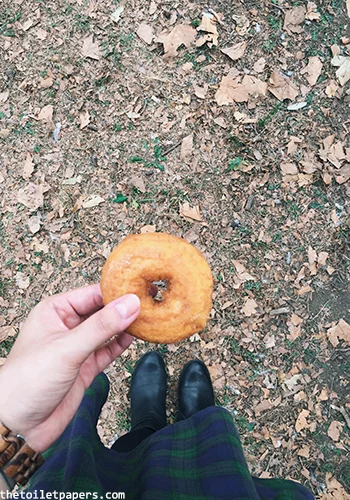
why is there a photo of an apple cider doughnut? because i traded my email address for a doughnut, aka i signed up for a newsletter because it meant i could have a doughnut. which goes to say that enticing people with food? it works, folks. (heh, joking; i would've signed up, anyway.)

and that was the brooklyn book festival for me this year! thanks for reading!