the last book i read in 2013 was aleksandar hemon’s the book of my lives.
and now that it is properly 2014 and i’ve had a long day, i shall hie myself to bed. good night, all, and happy new year!
the last book i read in 2013 was aleksandar hemon’s the book of my lives.
and now that it is properly 2014 and i’ve had a long day, i shall hie myself to bed. good night, all, and happy new year!
"Is This Shovel a Real Shovel?" from The Wind-Up Bird Chronicle
- Robert Schumann, Forest Scenes, Op. 82
VII. Bird As Prophet (excerpt)
"Reiko’s Monologue" from Norwegian Wood
- Paul McCartney and John Lennon, Norwegian Wood (Arr. Richard Miller)
- Frederic Chopin, Etude, Op. 25, No. 1
- Muzio Clementi, Sonatina in C major, Op. 36, No. 3
- Claude Debussy, Clair de Lune
- Edvard Grieg, Norwegian Dance, Op. 35
I. Allegro
"The Tale of Miu and the Ferris Wheel" from Sputnik Sweetheart
- Wolfgang Mozart, Sonata in B flat Major, K. 333
I. Allegro (excerpt)
- Claude Debussy, Fireworks (excerpt)
- Sergei Profokiev, Sonata No. 2 in d minor, Op. 14 (excerpts)
I. Allegro, ma non troppo
II. Scherzo, Allegro marcato
III. Andante
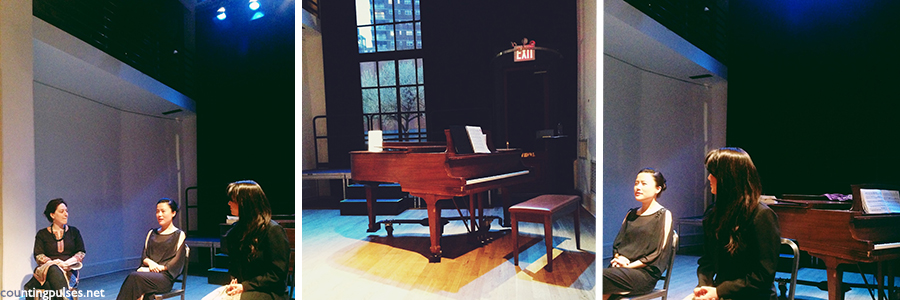
went to a fantastic performance tonight called “murakami music.” a pianist (eun-bi kim) and an actress (laura yumi snell) worked with a director (kira simring) to set some of murakami’s works to music, specifically the pieces above. it started off with “is this shovel a real shovel?” feeling like a pretty traditional reading with a piano accompaniment, the music chosen and played very deliberately to go with the reading, and the pieces flowed organically from “is this shovel a real shovel?” — “reiko’s monologue” was slightly more dramatic, like a story not only being told but performed, and the set reached a wonderful climax with “the tale of miu and the ferris wheel,” which felt the most like a performance.
(during “is this shovel a real shovel?,” laura actually read from the book, the wind-up book chronicle — or held it in her hands and used it as a prop — while the two other stories were performed without the books.)
i really loved how these stories were set to music, and not only that but also how the whole thing was brought to life. i honestly had gone in expecting someone to be reading while someone played the piano in the background, so i was very pleasantly surprised at how thoughtfully all the music pieces had been chosen and arranged and how the performances had been choreographed and staged. the cell is a tiny, tiny theatre, but i loved the use of space — there was just a piano on the floor and a raised platform behind it, but they made very effective use of it with their movements and with the lighting. also, costuming was great, too: laura first started reading in a coat over an evening dress and heels, removed the coat between the first and second story, then removed the evening dress to reveal a shorter dress for the third story. (she also changed her shoes at one point, but i forgot where, sorry!) at the end of the third story, she undid her hair and brought the coat back into play — and i’d say what i liked best was that eun-bi and laura weren’t simply telling stories, but they were, in a sense, embodying the stories, really thinking about what murakami was saying and how to express that through music and performance.
at the end, eun-bi and laura played a duet together (they’re both classically trained pianists, though laura switched to theatre), which was fantastic because, one, i love duets and, two, it felt like the ending credits of a film. there was a q&a after, too, during which they talked about murakami, about being friends, about wanting to do more with this project, and i really liked how the tiny space made for a more intimate conversation where the audience was also able to engage with them.
all in all, it was an amazing night, and i’m so glad i went. i really hope they continue to do more of these, and, now, i really can’t wait until murakami’s new novel is translated and published in english, and i want to read more of him, despite having felt a little lukewarm towards him recently. i can’t deny that murakami has a very strong pull for me, despite said lukewarmness, and i’ve been wanting to buy the paperback of 1Q84 and read it again, so, hey, maybe i’ll get on that!
went to go see the revisionist again with a friend, and there was a talkback after, in which the cast and the director did a bit of a q&a with another “living playwright” and took questions from the audience.
at one point, the living playwright mentioned that workshopping can confirm the suspicions you have regarding your work, and i liked that point because it’s true — when i did a fiction writing workshop during undergrad, i knew where the weaknesses were in my stories, especially in the first draft stage, and it was refreshing, honestly, to get feedback that confirmed that because it reminded me not to be lazy or slack off but to continue honing my craft down to every single word because every single word counts.
(spoilers ahead)
the revisionist really is a lovely play, and, holy, vanessa redgrave is so fucking brilliant. it’s not perfect; some of the transitions are awkward and some of the dialogue is stilted; but, overall, it’s a lovely play. plays are interesting to see more than once, too, because a play is a living thing — it’s different every time. an additional detail had been added to the play since i first saw it in previews —* the phone rings at the very end of the play, but maria doesn’t answer it — and i thought that detail was so lovely and demonstrated in a rather subtle way how david had affected her day-to-day existence.
(* i think this detail actually just slipped my mind after i saw the play the first time. it did indeed ring in the previews, but i was so excited about everything else that this one escaped me. heh. sorry.)
also, in the talkback after, jesse eisenberg actually mentioned that vanessa redgrave had suggested a change in the play that i think is incredibly significant — maria is a survivor of the holocaust because her mother paid her catholic nanny to take maria from the ghetto and hide her, and, when the war ends, maria is alone with no family. she meets a girl she used to know whose family also did not survive, and this girl is dying from tuberculosis and tells maria that she has family in new york city, and this girl dies, and, years later, after maria is married and has papers and consequently now exists, she contacts an organisation in israel and gives the name of this girl, which is how she becomes david’s cousin. originally, eisenberg had written it that the girl “gave” maria her family, leaving maria a note essentially giving her permission to “become” her, but redgrave suggested changing that, that maria assumes that identity herself in her desire for family.
that really is what takes the revisionist to the next level, i think, and i think it’s so fabulous how the creative process works and how this is the ideal of what we hope the collaborative creative process to be. and, in the talkback, eisenberg was asked a question about the ending, and he mentioned something about maria resenting having told david the truth, and i think that’s fantastic, too, because i still took away from the play the same thing i did before — how the phrase “i don’t care” has this dual meaning, that it’s the best thing he can say to her whereas it’s the worst thing she could hear because, to him, it’s his way of accepting her and saying that she means something to him but, to her, it’s a rejection. and, also, how the play is fluid, really, because, earlier, maria and david have an exchange where she’s incredulous that family doesn’t mean much to him, that he barely ever sees his sister and he gets along with his friends better than his family and blood doesn’t mean much to him — and she asks him about that a second time as though she wants to confirm it, as though she starts thinking in that moment that it might be okay to entrust the truth to him — and, god, yes, i do feel like i’m doing that english literature major thing and attributing more depth to something than exists, but i feel like a little shit every time i think that because i think a lot about my own work and it makes me tingle hoping that, maybe, someone will love something i wrote enough to think about it and mull over it.
which reminds me of a line from the revisionist — david’s a writer, and, when maria asks him if he wants to be famous, he replies, “i would like to be acknowledged” — and that, well, i can empathise with that.
jesse eisenberg has been on my radar since the social network led me to delve into his backlog, but i didn’t really know much about him until i went to his talk at the 92y with thane rosenbaum. i think it’s safe to say that people tend to have a general impression of him from his body of work; he plays the awkward and neurotic but charming and endearing character a little too well; and he’s very much in conversation as you’d imagine — awkward, yes, neurotic, yes, but charming in heaps and very sharp and smart. and funny. i’d known he’d written a play that he’d be starring in starting in february, and i’d known he’d written and acted in a play last year, too, but i had my doubts, honestly, in the way that i doubt every actor or singer or celebrity who decides to write. (or, as is usually the case, “write.”) after hearing him in conversation, though, i was very much intrigued (and very much in love) and curious, so off i went to the theatre, and i can say in all honesty that i really liked the revisionist.
i’m shit with summaries, so i’m not going to try to summarize the play here (google’s your friend), but here’s a bit i wrote in my journal when i got home. i’ve edited out possible spoilers, and forgive the clumsy writing — i didn’t edit it at all:
"… I loved what it said about family — how we had these two characters who were so different — to him, family doesn’t mean much, but, to her, family is everything. She lives all the way out in Poland but knows more about their extended family Stateside; he doesn’t really understand why she’d hang the photographs of people who don’t come to visit her on her walls; and, in the end, when she tells him the truth, … and he tells her he doesn’t care — that statement "I don’t care" means one thing to him and is his way of accepting her … but, to her, the words are a rejection, that it doesn’t matter, she doesn’t matter, he only chose to come to Poland as a last resort, anyway. Even though he’s there visiting her in Poland, he’s no better than all the other extended family she hangs on her walls but to whom she doesn’t exist."
at least, that’s one thing i took away from the play, and i’m kind of dying to see it again because i do that — once i watch something i like, i want to watch it again (and again) (and again, sometimes). (the same applies to films; there are honestly so few films i actually like that, if i stumble upon one i do, then i can’t get enough.)
there’s this beautiful scene in the play, too, where david (eisenberg) finally lets maria (vanessa redgrave) tell him who the people in the photographs are, and he asks her how many of these people came to visit her, and she tries to deflect the question, and it’s this beautiful but painful scene, so wonderfully acted by both of them. jesse eisenberg and vanessa redgrave work very well together in the play, and, oh, god, vanessa redgrave — i don’t think it even needs to be said that she is stellar. so stellar.
jesse eisenberg’s one to watch, i think, not just as a film actor but kind of just … as a creative person? or even as a human being? in the least creepy way possible, i mean. i like his bluntness, the fact that he doesn’t try to project a persona or fit a mould, and i particularly like that he is clearly a thinking, introspective person who reflects upon himself. he did an interview with vulture (i think that’s how i should cite it), in which he talked about the first play he wrote, asuncion, and there are two specific things he says that i actually wrote into my journal and replied to, not only because his responses were in themselves thought-provoking but also because they resonated on a personal level — and i’ve thought of posting them here, and i guess we’ll see if i actually do.
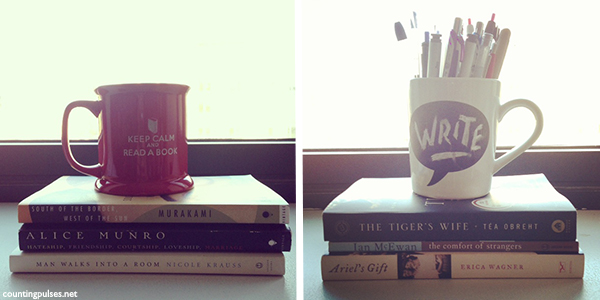
recent reads + current (or intended) reads.
nicole krauss, man walks into a room
this remains one of my favourite books and is still my favourite by her. man walks into a room is krauss’ debut novel, yet her writing is assured and confident but humbly so — the novel doesn’t carry the insecurities you might find lurking under other debut novels — and i just love that it’s a book about memories and self and how those two intersect in questions about identity. this is one of my favourite quotes from it. this is another. this is one of my favourite passages. gah, basically, i love this book, everything about it — the story it tells, the characters it shares, the words in which its written — and i love how human it is, how relatable samson is even if his experience is one entirely foreign to me, how full of love it is.
alice munro, hateship, friendship, courtship, loveship, marriage
favourite stories were “family furnishings,” “nettles,” and “what is remembered.” i also really liked “queenie,” except the ending felt really abrupt and incomplete. munro is less about her writing itself technically than she is about this mood/tone she captures, and she does such an excellent job of creating a whole, lived-in world in the frame of a short story. her portrayals of life and marriage are so real but almost in a way that i, at this moment in my life, find rather undesirable as a reading experience — munro doesn’t try to create a veneer over the realities of marriage in her stories (and i think this distinction is important — that these are the realities of marriage in her stories) — but you know how it’s pretty much universally accepted that munro is not only a fantastic writer but also a brilliant short story writer? yeah, that’s all entirely warranted; her stories are compelling and told well; but i do stick to my brief comment before about how i find her stories in first-person more powerful.
haruki murakami, south of the border, west of the sun
ah, murakami, i can’t stay away. as i was reading this, i wrote in the margin, “this does feel more solid and less other worldly than, say, norwegian wood or 1q84,” and it really did. murakami’s tone is the same as ever (he’s so consistent in that aspect), but south of the border, west of the sun felt very grounded, very much a story of this world and only this world, even if there were hints of murakami’s usual surrealism. i’m still a little unsure as to how i feel about the story; there are strong elements of justification (or, if not justification, then mere acceptance) for hajime’s decisions to cheat on, first, his girlfriend and, then, his wife; and i guess i was put off by the ease with which these justifications (which were pretty much nothing more than physical desire) were given.
however, a passage i absolutely loved when yukiko (hajime’s wife) asks him if he’s leaving her — hajime says,
yukiko, i love you very much. i loved you from the first day i met you, and i still feel the same. if i hadn’t met you, my life would have been unbearable. for that i am grateful beyond words. yet here i am, hurting you. because i’m a selfish, hopeless, worthless human being. for no apparent reason, i hurt the people around me and end up hurting myself. ruining someone else’s life and my own. not because i like to. but that’s how it ends up.
this is such a great summation of what it means to be human, i think. we don’t mean to hurt people or do wrong, but it can’t be helped because we’re human. we’re imperfect and sinful and selfish, hopeless, worthless, &c, and the most we can do is the best we can — all we can do is try and recognize that we will fail, but, then, we get up and try again — so, in the end, i did appreciate hajime’s struggle throughout the novel and how he came out from it.
(current [or intended] reads: a re-read of the tiger’s wife because, even i found this very flawed when i first read it when it was published, i like obreht’s writing, and i liked the story of the deathless man + a re-read of the comfort of strangers, which i loved when i read it years ago + ariel’s gift because birthday letters is the only poetry collection i absolutely love and, well, my obsession with sylvia plath is still going strong. let’s see what other books distract me from these, though.)